Leather Grades Explained: Full-Grain vs. Top-Grain vs. Genuine vs. Bonded
“Genuine leather” sounds like the good stuff. It’s actually the opposite — a marketing term that, ironically, usually signals the second-to-lowest grade on the market. Leather grading has no single universal standard, which is exactly why terms like this persist: they sound reassuring without meaning much of anything specific.
This guide explains what each grade actually is, where it comes from on the hide, and how that origin determines everything from durability to whether it develops a patina at all. Our guide to spotting genuine full-grain leather covers the hands-on tests for telling these grades apart in person; this one covers what those grades actually mean.
The Four Grades, Ranked
| Grade | Comes From | Durability | Develops Patina? |
|---|---|---|---|
| Full-grain | The outermost layer, unaltered | Highest — decades with care | Yes, extensively |
| Top-grain | Outer layer, sanded and refinished | High, though the sanded surface can’t develop the same patina | Limited |
| Genuine leather | Lower split layers, heavily processed | Low — typically a few years | No |
| Bonded leather | Scraps and shavings glued together | Lowest — fails by peeling or cracking | No |
The name “genuine leather” ranking below “top-grain” surprises almost everyone hearing it for the first time, since the word “genuine” reads as a quality signal in virtually every other context. In leather specifically, it means something closer to “technically real leather, but from the discarded layers.”
None of this classification is enforced by any regulatory body, which is exactly why it persists. A brand can technically call a heavily processed, printed-texture hide “genuine leather” without violating any labeling law, since the term only means the product contains some percentage of actual leather, not that it comes from a specific, high-quality part of the hide.
Full-Grain: The Top of the Hide, Untouched
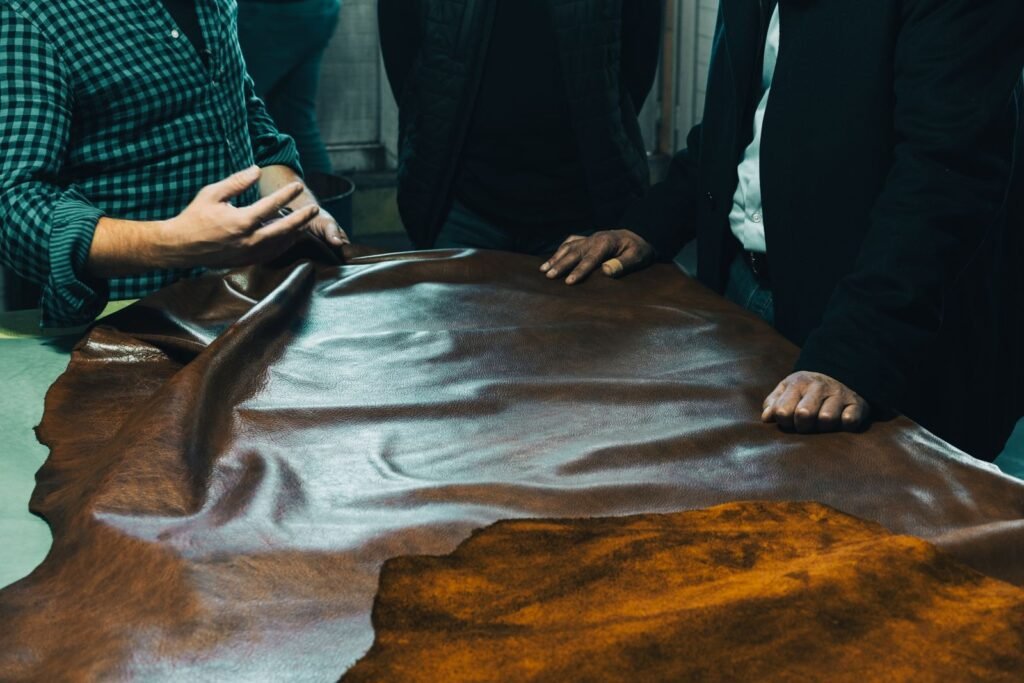
Full-grain leather is cut from the outermost layer of the hide and left essentially as it comes off the animal — no sanding, no buffing, no correcting away natural marks. That outer layer contains the densest, strongest fiber structure in the entire hide, which is why full-grain leather holds up longest and why it’s the only grade that develops a genuine, deepening patina with age.
The trade-off is consistency. Because natural markings, small scars, and grain variation are left in rather than sanded away, full-grain leather looks less uniform piece to piece than a corrected grade. That variation is part of the material’s character rather than a flaw, but it’s worth knowing going in if uniform, catalog-perfect consistency is what you’re actually looking for.
Top-Grain: The Refined Middle Ground
Top-grain leather also comes from the upper layer of the hide, but the surface is sanded and refinished for a more uniform look before a fresh, artificial texture is often stamped back on. It’s genuinely durable, and the more consistent finish appeals to buyers who want a polished, predictable surface rather than natural variation.
The sanding is also what limits its aging potential compared to full-grain. Removing the natural grain layer removes the fiber structure that full-grain leather ages on, so top-grain leather changes less dramatically over time, even though it holds up well structurally for years of regular use.

Genuine Leather: The Misleading Middle
Genuine leather is cut from the lower split layers left over once the higher grades have already been taken from the hide. It’s then heavily sanded, buffed, and often coated with a printed texture to disguise the fact that it lacks the dense, natural grain structure of the layers above it.
This is why genuine leather tends to wear out rather than break in — it lacks the fiber density that lets full-grain and top-grain leather flex and soften gracefully under repeated use. Expect a lifespan measured in a few years of regular use rather than the decade-plus range higher grades can reach.
The stamped, artificial grain pattern applied to disguise the sanded surface is often the fastest tell in person. It tends to repeat in an unnaturally regular pattern across the material, unlike the irregular, non-repeating variation of a natural grain, and it can look slightly too uniform under close inspection or raking light.

Bonded Leather: Not Really Leather at All
Bonded leather is made from leftover leather scraps and shavings, ground down and bonded together with adhesive, then coated in polyurethane to mimic the look of real leather. It typically contains only a small percentage of actual leather fiber by weight, with the rest being filler and binding agent.
It fails differently than genuine leather issues, too, rather than simply wearing thin, bonded leather tends to peel, crack, or delaminate at the coated surface, since that surface was never structurally part of a hide to begin with. It’s the grade most worth avoiding for anything meant to last.
Bonded leather shows up most often in budget furniture and low-cost accessories rather than dedicated leather goods brands, largely because the cost savings only make sense at a certain scale and price point. If a product’s price seems dramatically lower than comparable full-grain or top-grain pieces, checking specifically for “bonded” or “reconstituted” leather in the description is worth the extra minute before buying.

Why This Matters for What You’re Actually Buying
The grade determines nearly everything that matters about a leather good’s long-term value — how it ages, how long it lasts, and whether it’s worth conditioning and repairing versus simply replacing. Our own line is built entirely from full-grain, vegetable-tanned Horween leather specifically because that combination is what makes a genuine, decades-long patina possible; our Horween leather guide covers how the tanning method interacts with the grade itself.
Grade and tanning method are genuinely separate questions worth not conflating. A hide can be full-grain and still be chrome-tanned rather than vegetable-tanned, which changes the finished leather’s behavior in a different way than the grade alone does. Our Horween vs. Italian leather guide covers that second variable in more depth.

Frequently Asked Questions
Is “genuine leather” actually good quality?
No, despite the name. It’s typically the second-lowest grade, made from lower split layers of the hide and heavily processed, with a lifespan of just a few years compared to decades for full-grain.
What’s the difference between full-grain and top-grain leather?
Full-grain leather keeps the hide’s natural surface untouched; top-grain leather is sanded and refinished for a more uniform look. Full-grain develops a deeper patina and generally lasts longer.
Is bonded leather real leather?
Only partially. It’s made from ground-up leather scraps and shavings bonded with adhesive and coated in polyurethane, and it typically fails by peeling or cracking rather than aging gracefully.
Which leather grade develops the best patina?
Full-grain leather, by a wide margin. Its untouched natural grain and dense fiber structure are exactly what allow the deepening color and softening texture patina depends on.
How can I tell what grade a leather product actually is?
Check the product description for the specific grade named, not just the word “leather,” and look for natural grain variation versus a uniform, stamped texture, which often signals a lower grade.
Is top-grain leather a bad choice?
Not at all. It’s genuinely durable and offers a more consistent, polished appearance than full-grain, making it a reasonable choice for buyers who prioritize uniformity over dramatic aging.
For a deeper breakdown of how leather is graded, see Galen Leather’s guide to leather grading.