Corporate Bulk Ordering Guide: Leather Gifts for HR and Procurement Teams
Most corporate gifting content answers what to buy. It rarely answers how a bulk order actually moves through a procurement process — minimum order quantities, branding methods, proof approval, and the lead times that determine whether a batch of gifts actually arrives before the event it’s meant for.
This guide covers that operational side specifically, for HR and procurement teams sourcing leather goods in volume rather than picking a single gift for one person. For budget benchmarks and gift-giving etiquette, our corporate gift guide covers that separately.
The two guides answer genuinely different questions. That one helps you decide what to give and how much to spend per person; this one covers how to actually get a branded, multi-recipient order from an initial inquiry to delivered boxes without the process itself becoming the bottleneck.
The B2B Ordering Process, Step by Step
| Step | What Happens |
|---|---|
| 1. Request a quote | Share product, estimated quantity, and target delivery date |
| 2. Digital proof | Logo submitted in vector format (AI, EPS) for a branding mockup |
| 3. Proof approval | Internal stakeholders sign off before production begins |
| 4. Production | Runs on the vendor’s timeline, typically several weeks |
| 5. Delivery | Shipped in bulk, sometimes with individual packaging per recipient |
The proof approval step is where most delays actually originate, not production itself. A logo mockup that has to route through legal, brand, and a manager before sign-off can add more time to a project than the manufacturing does.
Getting the vector artwork right on the first submission also avoids an entirely preventable delay. A logo saved as a low-resolution JPEG or PNG typically has to be redrawn in vector format before it can be used for embossing or engraving, which adds a design step most procurement teams don’t budget time for upfront.

Understanding Minimum Order Quantities
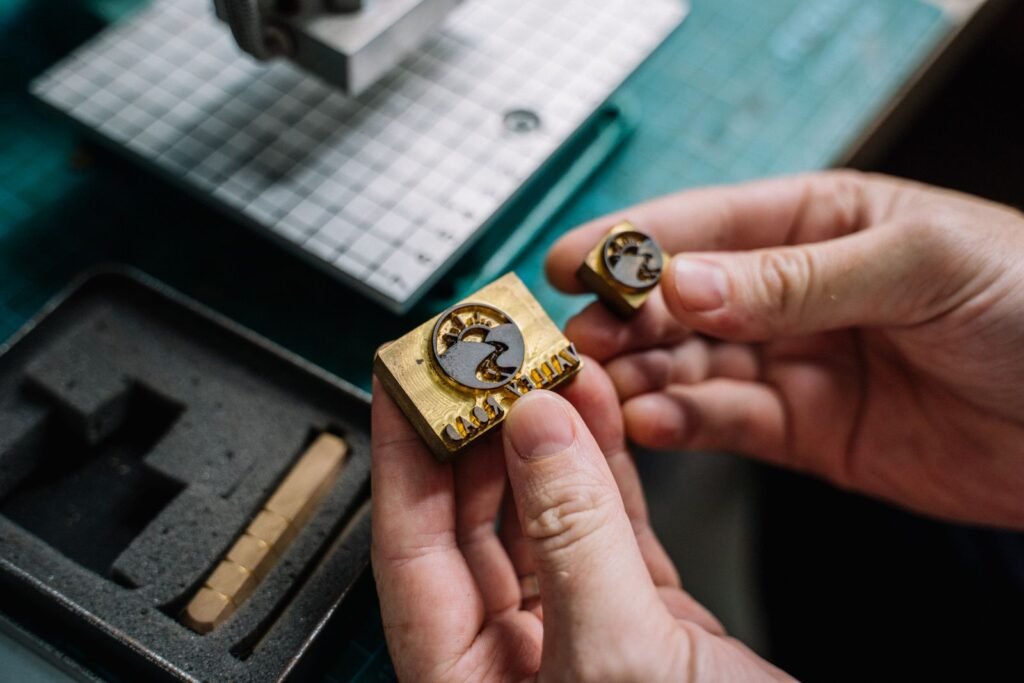
Custom leather goods carry real setup costs before a single unit is produced — a custom brass stamp for embossing, initial proofing, and quality-check calibration. Those fixed costs get spread across the order, which is why minimum order quantities exist and why a larger order typically lowers the effective cost per piece.
If your list is smaller than a vendor’s stated minimum, ask directly whether a smaller custom run is possible at a different per-unit cost, rather than assuming the order isn’t viable at all. Many vendors have more flexibility here than a published minimum suggests.
It’s also worth asking whether an existing branding tool can be reused across multiple orders placed over time. If your organization plans to order the same branded piece annually, for new-hire welcome kits or an annual client gift, a one-time setup cost amortized across several future orders changes the economics considerably compared to treating each order as a standalone setup.
Branding Methods Compared
| Method | Best For | Visual Effect |
|---|---|---|
| Blind deboss | Subtle branding, client-facing gifts | Recessed impression, no ink or color change |
| Heat foil stamping | A logo that needs to stand out visually | Metallic or colored impression |
| Laser engraving | Individual names or initials alongside a logo | Precise, permanent dark contrast |
| No branding | Executive or VIP gifts | The piece itself is the statement |
Our corporate gift guide covers why subtle branding tends to outperform a large visible logo for client-facing gifts specifically — the same logic applies whether you’re ordering one piece or five hundred.
If you’re personalizing a single piece for one recipient rather than branding a full order, the process is considerably simpler than what’s covered here. Our leather monogram personalization guide covers individual monogramming specifically — getting initial order, font, and placement right for one person’s gift.
Lead Time Planning
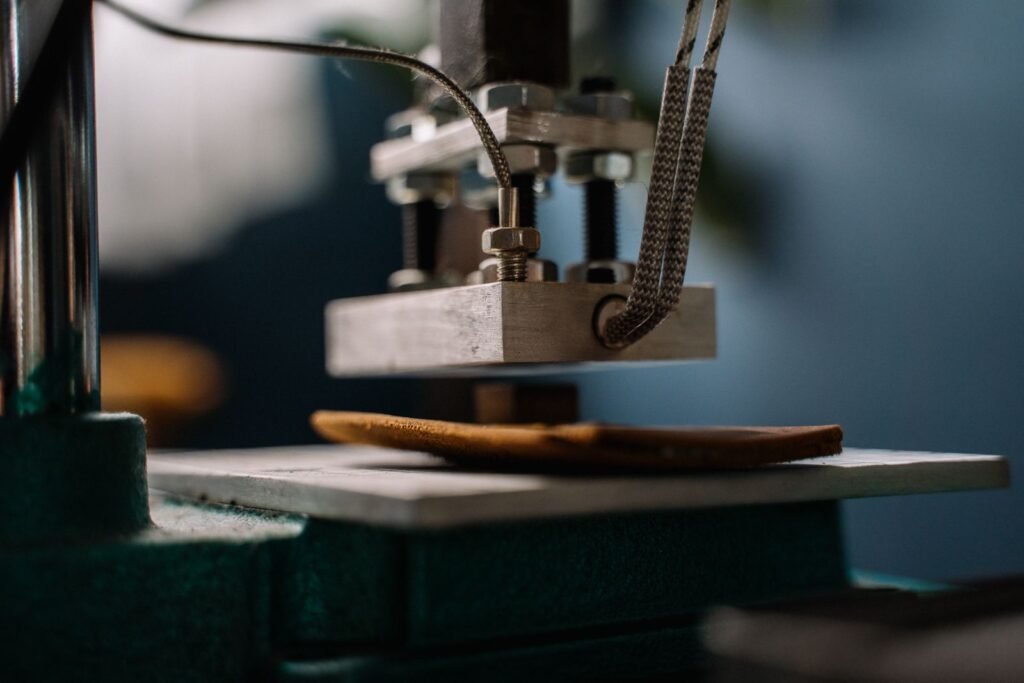
Custom leather goods generally need more production time than printed promotional items, since branding involves a physical tool and hand finishing rather than a quick print run. Build in extra buffer beyond the vendor’s stated timeline, particularly for orders tied to a fixed date like an annual conference or a specific quarter’s onboarding cohort.
Working backward from a hard deadline, rather than forward from when you happened to start sourcing, is the more reliable planning method. If the event date is fixed, the ordering process needs to start early enough to absorb a proof revision or two without threatening delivery.
Seasonal demand is worth factoring in too. Vendors handling custom leather goods often see order volume spike around year-end holidays and graduation season, which can extend otherwise-typical lead times during those windows specifically. Confirming current capacity rather than relying on a generic published timeline matters more during those periods than the rest of the year.

Building Your Internal Approval Workflow
Establishing who needs to sign off on branding, budget, and final quantity before you request a quote, rather than discovering those approvals mid-process, removes the most common source of delay in bulk gifting. A short, written approval chain shared with the vendor up front also helps them plan around your internal timeline rather than assuming a quick turnaround.

Questions to Ask Any Corporate Gifting Vendor
- What’s the minimum order quantity, and is a smaller custom run available at a different price point?
- What branding methods do you offer, and can I see a physical or digital proof before committing?
- What’s the realistic lead time from proof approval to delivery, not just from order placement?
- Can individual pieces be packaged separately for direct distribution to recipients?
- What happens if a name or detail needs correcting after production has started?

If you’re planning a bulk order of our own pieces for a team, client list, or event, reach out to us directly with your quantity and timeline — bulk pricing, current lead times, and branding options are confirmed per order rather than published as a fixed rate, since they vary by piece and quantity.
Frequently Asked Questions
What information should I include when requesting a bulk quote?
Product, estimated quantity, target delivery date, and whether branding is needed. This is enough for most vendors to return an initial quote and timeline.
Why do minimum order quantities exist for custom leather goods?
Custom branding involves real setup costs, like a custom stamp, that get spread across the order. Larger orders typically lower the per-unit cost as a result.
What’s the difference between blind embossing and laser engraving?
Blind embossing presses a design into the leather without ink, creating a subtle recessed impression. Laser engraving burns a precise, permanent dark mark, better suited to individual names or detailed logos.
How much lead time should I build in for a corporate bulk order?
More than the vendor’s stated production time alone. Build in buffer for proof revisions and internal approval delays, which are often the actual bottleneck.
Can a smaller order still get custom branding?
Often yes, sometimes at a different per-unit cost than a full minimum-order run. It’s worth asking directly rather than assuming a small order isn’t viable.
Should every recipient’s gift be individually packaged?
For direct distribution, yes. For gifts handed out at a single event, bulk packaging with on-site distribution is often simpler and less costly.
For more on custom leather products in B2B corporate gifting, see Contrado’s guide to custom leather corporate gifting.