The Leather Care Kit: What You Actually Need (and What to Skip)
Walk down a leather care aisle and you’ll find a dozen products claiming to be essential. In practice, almost everyone needs three of them, and the rest are either specialized extras or, in at least one popular case, mildly controversial.
This guide covers what actually belongs in a leather care kit, what each product does differently, and where a widely recommended one — mink oil — deserves a more careful answer than most articles give it.
Most of the confusion in this category comes from marketing rather than genuine differences in what leather needs. A dozen products from a dozen brands often boil down to the same two or three functions repackaged with different names and price points.

The Three-Step Leather Care Process
Nearly every leather care routine, regardless of brand or product line, breaks down into the same three steps: clean, condition, protect. Everything else in a “complete kit” is a variation on, or an accessory for, one of those three.
Cleaning removes surface dirt, oils from handling, and product residue before anything else touches the leather. Conditioning replaces the natural oils leather loses through age and friction, keeping it flexible instead of brittle. Protecting, usually with a wax or spray, adds a layer of water and stain resistance on top of a leather that’s already clean and conditioned.
Skipping the order matters more than skipping a step entirely. Conditioning over dirt just traps the dirt in; protecting before conditioning seals in dryness rather than moisture. The sequence is part of why the process works, not just the products themselves.
This routine handles ordinary upkeep; an active spill is a different problem with its own methods. Our stain removal guide covers ink, oil, wine, and water spots specifically, including what not to reach for.
Conditioning consistently is also the single biggest factor in whether a small daily-carry piece, like a wallet, actually reaches the upper end of its expected lifespan — our wallet lifespan guide covers what that looks like in real years, plus the signs it’s genuinely time to replace one.
Leather Conditioner vs. Cream vs. Oil: What’s the Difference
| Conditioner | Cream | Oil | |
|---|---|---|---|
| Primary job | Restores lost natural oils, maintains flexibility | Balanced nourishment plus surface shine | Deep penetration for heavily dried leather |
| Penetration | Moderate | Surface-level | Deep — up to a few millimeters |
| Best for | Routine, ongoing maintenance | Faded or lightly dried leather needing a refresh | Leather that’s already dry, cracking, or stiff |
| How often | Every 2–3 months | As needed for touch-ups | Rarely — only for genuine dryness |
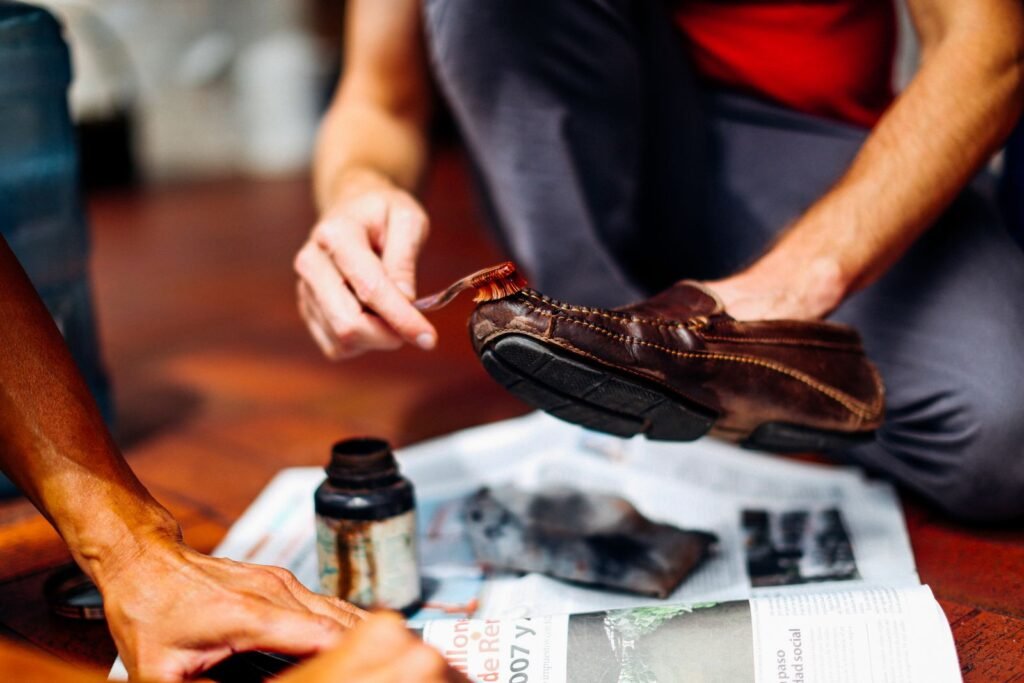
For everyday vegetable-tanned leather goods, a conditioner covers routine needs. Oil is a heavier intervention, best reserved for leather that’s genuinely dried out rather than applied preventively — over-oiling can darken leather more than intended and soften it past where it should be.
What’s Actually in a Leather Care Kit
| Item | Purpose | Skip It? |
|---|---|---|
| Leather cleaner | Removes surface dirt and product residue safely | No — essential |
| Leather conditioner | Maintains flexibility, prevents cracking | No — essential |
| Microfiber cloth | Applying and buffing product without scratching | No — essential |
| Soft brush | Cleaning seams, corners, and stitch lines | Optional, but useful |
| Edge dressing/wax | Sealing exposed edges on bags and wallets | Optional — only if you’re doing detail work |
| Color restorer | Concealing scuffs, evening out faded tone | Skip unless a specific piece needs it |

A minimal, genuinely useful kit is a cleaner, a conditioner, and a microfiber cloth — that covers the actual maintenance needs of most everyday leather goods. The brush and edge dressing are worth adding if you own several pieces or do more detailed upkeep; the color restorer is a specialty item most people will never need.
It’s worth resisting the pull toward buying every add-on at once. A color restorer sitting unused because nothing you own has actually faded isn’t a useful purchase, no matter how complete the bundled kit looks on a shelf.
Should You Use Mink Oil? The Honest Answer
Mink oil shows up constantly in leather care advice, and the opinions genuinely conflict. Its defenders point to real softening and water-resistance benefits from the fatty acids it contains. Its critics point to a real risk: with repeated use, it can oxidize, harden, and darken leather more than intended, and its organic content can attract mold over time.
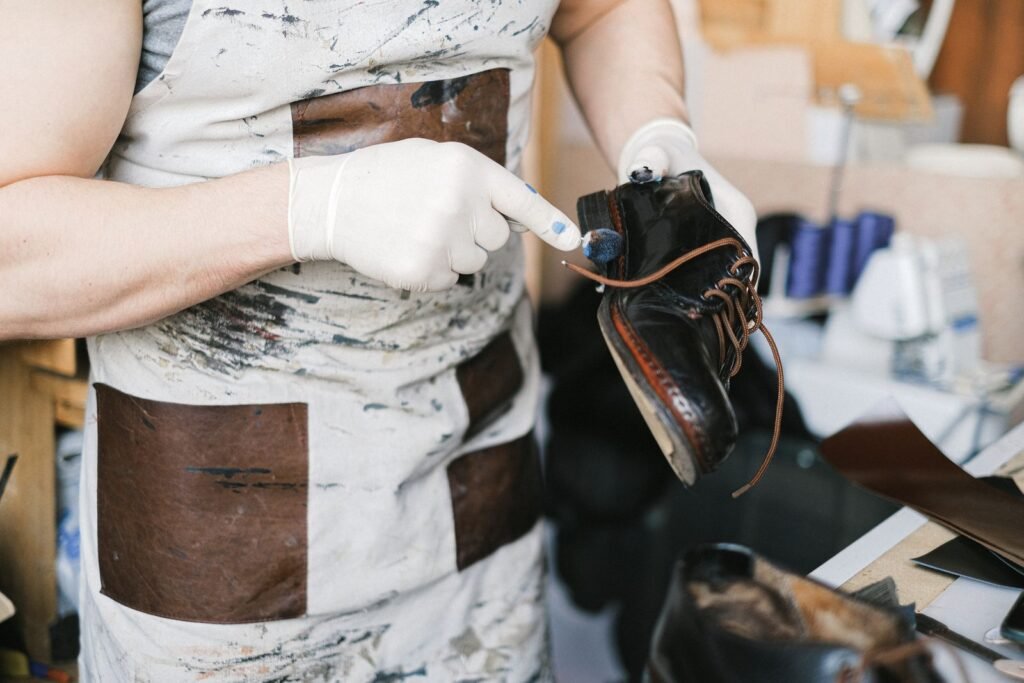
Our practical take: for vegetable-tanned leather goods like wallets and bags, skip it. Mink oil is more commonly used on smooth, chrome-tanned leather like work boots, where its water-resistance properties matter more than color preservation. A dedicated leather conditioner, formulated for the specific leather type, does the routine job better and more predictably.
Part of the disagreement comes down to what people are actually using it on. Mink oil’s track record on tough, chrome-tanned work boots is genuinely different from how it behaves on a thinner, vegetable-tanned wallet or bag — the same product isn’t a wash across every kind of leather, which is exactly why blanket advice in either direction misses the point.
Mink oil is really one piece of a bigger ingredient question worth understanding fully. Our leather conditioner ingredients guide breaks down what’s actually in a bottle of conditioner, from lanolin and beeswax to the petroleum-based fillers worth avoiding regardless of the product’s marketing.
A Minimal Kit vs. a Full Kit
| Minimal Kit | Full Kit | |
|---|---|---|
| Contents | Cleaner, conditioner, microfiber cloth | Everything in Minimal + brush, edge dressing, color restorer |
| Typical cost | $20–$40 | $50–$100 |
| Covers | Routine maintenance for most owners | Detail work, multiple pieces, occasional repairs |
| Best for | One or two everyday leather pieces | A growing collection or frequent hands-on care |
How Often to Actually Use Each Product
Wipe with a barely damp cloth as needed; condition every two to three months rather than every few weeks — over-conditioning is as damaging as neglecting it entirely, a rule we cover in more depth in our vegetable-tanned Horween leather guide. If you own a suede piece, none of this applies — suede needs an entirely separate set of tools.
Between uses, our storage guide covers how to keep a piece in good shape when it isn’t being actively conditioned or carried at all.
That two-to-three-month conditioning window is an average, not a fixed rule — dry, heated winter air and hot, humid summer conditions both push leather in different directions and change how often it actually needs attention. Our seasonal leather care guide covers what shifts between winter and summer specifically.
Frequently Asked Questions
Do I need both a cleaner and a conditioner?
Yes, they do different jobs — a cleaner removes dirt and residue, while a conditioner restores oils and flexibility. Skipping either leaves a gap in basic maintenance.
Is mink oil good or bad for leather?
It’s genuinely debated. For everyday vegetable-tanned leather goods, a dedicated conditioner is the safer, more predictable choice; mink oil is better suited to chrome-tanned leather like work boots.
How often should I condition a leather bag or wallet?
Roughly every two to three months for regular use. Conditioning more frequently than that can over-soften and darken the leather unnecessarily.
What’s the difference between leather cream and leather conditioner?
Cream is lighter, offering surface-level nourishment and shine, sometimes with color restoration. Conditioner penetrates further to restore the leather’s internal flexibility and is the better choice for routine maintenance.
Do I need a separate care kit for suede?
Yes. Suede requires different tools entirely — a suede brush, protector spray, and specific stain-removal methods — rather than the cleaner-and-conditioner routine used for smooth leather.
How much should a basic leather care kit cost?
A minimal kit covering a cleaner, conditioner, and microfiber cloth typically runs $20 to $40, which is enough for routine maintenance on one or two everyday leather pieces.
For a deeper look at mink oil’s pros and cons, see Leather Honey’s guide on using mink oil on leather.