How to Pack a Briefcase Efficiently: A Daily Carry Organization System
A well-made briefcase doesn’t stay organized on its own. Give it a few weeks of daily use with no system behind it, and even a genuinely good single-compartment bag turns into a junk drawer, receipts at the bottom, a charger tangled around a pen, the one item you need buried under everything else.
This isn’t a packing-list problem; it’s a structure problem. This guide covers a simple system for organizing what goes in a daily work bag, built around how a single-compartment leather briefcase actually behaves, rather than generic advice written for a multi-pocket backpack.
Most organization advice online assumes a bag full of built-in dividers and dedicated pockets, since that’s what most backpacks and technical bags offer. A structured leather briefcase, especially a flatter, single-compartment design, has to be organized through habit and small internal accessories instead, which is a genuinely different problem worth solving on its own terms.
This system matters even more if you’re rebuilding a daily carry routine from scratch after years of working remote. Our returning to office guide covers what else changes about the commute itself beyond just what’s packed inside the bag.
The Three-Category Triage
| Category | Examples | Rule |
|---|---|---|
| Daily essential | Laptop, wallet, keys, phone charger | Lives in the bag permanently, same spot every day |
| Occasional | Umbrella, spare charger, notebook for a specific project | Added only on the days it’s actually needed |
| Shouldn’t be there | Old receipts, expired documents, food wrappers | Removed at the next reset, not carried indefinitely |
Most bag clutter comes from category three quietly accumulating because nothing ever prompts its removal. A weekly reset, covered further down, is what actually keeps that category from taking over.

Zone Your Bag Like a Desk
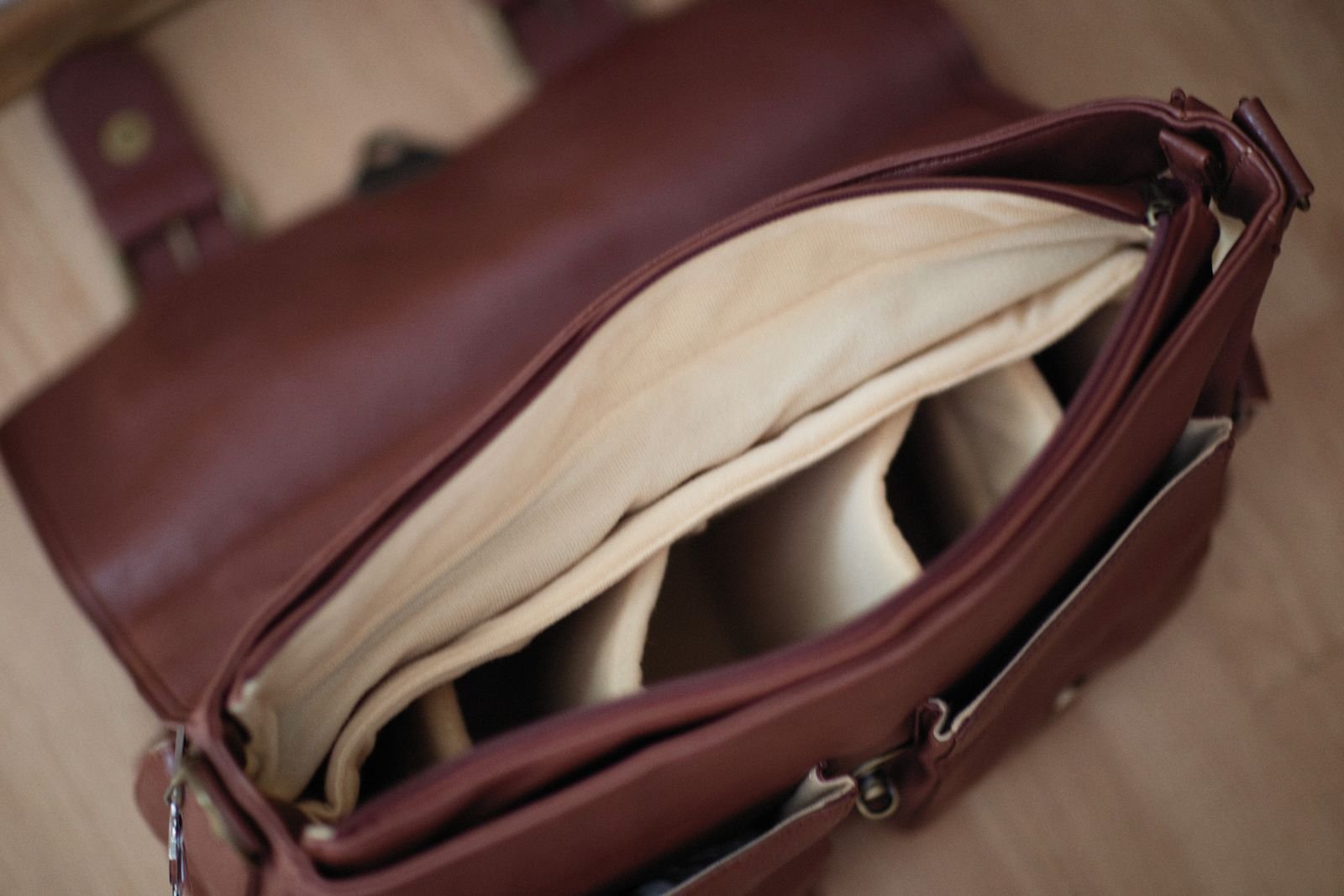
A single-compartment briefcase, like our own Slim Briefcase, doesn’t have built-in dividers, which means the zones have to be created with what you put inside it, not the bag’s construction.
- Back zone, against your body: the laptop, protected on the side least likely to take an impact.
- Center zone: daily essentials, wallet, keys, phone, kept together so they’re never buried under paperwork.
- Front zone: anything you need to grab without fully opening the bag, a transit card or a pen.
A bag like the Portage, built with three external pockets, essentially creates these zones for you architecturally. For a flatter single-compartment bag, the zones exist only if you’re consistent about where things go.
Taming Cables and Small Accessories
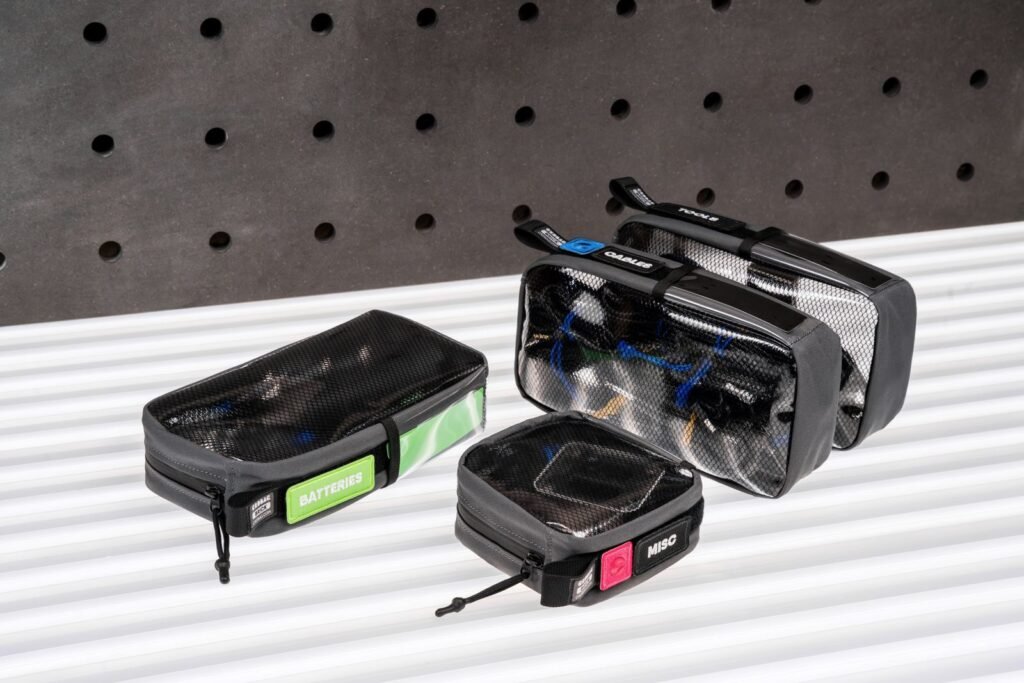
Chargers and cables are the single most common source of a “why is my bag always a mess” complaint, since they’re easy to damage, easy to lose, and prone to tangling around everything else in a single open compartment.
Our James Case, built for small daily items, doubles well as a dedicated cable-and-accessory pouch inside a larger bag, keeping loose items in one enclosed, magnetically-closed spot rather than free-floating against a laptop.
The habit that matters more than the accessory itself: always return the cable to the same pouch immediately after use, rather than setting it loose “just for now.” Nearly every tangled-cable complaint traces back to a single moment of putting something back in the wrong place under time pressure, not a lack of the right organizer.
Weight Distribution for a Shoulder-Carried Bag
A single-strap briefcase puts all its weight on one shoulder, which makes distribution matter more than it would in a backpack. Keep the heaviest item, usually the laptop, positioned against your body rather than swinging loosely at the bag’s outer edge, where it pulls the strap at an angle and accelerates wear at the attachment points.
Our briefcase buying guide covers exactly why those strap attachment points are the highest-stress area on any briefcase, which is a direct consequence of how weight gets distributed, or doesn’t, inside the bag day to day.
Switching shoulders periodically through the day helps too, though it’s a habit most people forget under normal circumstances. A bag that always rides the same shoulder concentrates wear at one set of stitching points and one side of your posture; alternating, even inconsistently, spreads that load more evenly over the life of the piece.

The Weekly Reset Ritual
Once a week, fully empty the bag onto a flat surface. Everything gets sorted back into the three categories from the start of this guide, essential goes back in, occasional gets evaluated for whether it’s still needed, and anything in category three gets removed permanently.
This takes under five minutes and is the single highest-leverage habit in this entire system. Skipping it for even a month is usually what turns a well-organized bag back into a junk drawer.
Tying the reset to an existing habit, Sunday evening before the week starts, or the same time you review a calendar for the coming week, makes it far more likely to actually happen than treating it as a standalone task competing with everything else on a to-do list.

Packing the Night Before vs. the Morning Of
Packing the night before, rather than rushing in the morning, is worth the small effort specifically because it’s the only time you can actually check the bag against tomorrow’s calendar. A morning pack tends to default to yesterday’s contents; an evening pack gets adjusted for what’s actually needed next.
This is especially useful on days with something out of the ordinary, an early client meeting, a trip to a second location, a document that needs to be printed and signed. Catching that requirement the night before leaves time to actually prepare for it; noticing it while rushing out the door the next morning usually means scrambling instead.
If tomorrow’s trip involves a flight, that evening check is also the right moment to review what needs to come out of the bag at security — our airport security guide covers exactly what to expect at the checkpoint with a leather briefcase.


Frequently Asked Questions
How do I keep a single-compartment briefcase organized without built-in dividers?
Create zones yourself, laptop against your body, daily essentials in the center, quick-access items near the opening, and stay consistent about where each item lives.
What’s the best way to organize cables and chargers in a work bag?
Keep them together in one dedicated pouch or small case rather than loose, which prevents tangling and accidental damage from other items in the bag.
Should heavy items go at the top or bottom of a briefcase?
Position heavy items like a laptop against your body rather than at the bag’s outer edge, which keeps a single-strap bag balanced and reduces strain at the strap attachment points.
How often should I clean out my work bag?
Once a week is a reasonable cadence, fully emptying the bag and re-sorting contents catches accumulated clutter before it becomes permanent.
Is it better to pack a work bag the night before or the morning of?
The night before, since it’s the only time you can realistically check the bag’s contents against the next day’s actual schedule.
Do bags with external pockets stay more organized than single-compartment bags?
Generally yes, since the pockets create zones automatically. A single-compartment bag can achieve the same result, but only with a consistent personal system.
For more on organizing a work bag’s contents, see Von Baer’s guide to briefcase contents and organization.