Retirement Gift Guide: Leather Gifts for the Next Chapter
A briefcase says “your working years.” That’s exactly the wrong message to send someone who just spent their working years earning the right to stop carrying one. Retirement is one of the few gift occasions where the most obvious leather pick is often the worst one.
This guide covers what retirees actually want, how much a retirement gift typically costs across different giving situations, and which leather pieces genuinely fit the “next chapter” instead of quietly reminding someone of the job they just left.
The short version: skip anything that reads as office equipment, lean into travel, everyday carry, and pieces that can be personalized with a date or years of service rather than a company logo.
How Much to Spend on a Retirement Gift
Retirement gifts span a wider range than almost any other gift-giving occasion, because the giver could be one coworker, a whole department, or a company marking decades of tenure.
| Giving Situation | Typical Range |
|---|---|
| Individual coworker contribution | $10–$30 |
| Group or department pooled gift | $50–$150 total |
| Close friend or family member | $50–$200 |
| Company-sponsored gift (varies by tenure/role) | $50–$1,000+ |
Company-sponsored budgets scale hardest with tenure and seniority. A retiring VP after 30 years often gets a materially larger budget than a five-year employee moving on to a new role elsewhere, and HR departments frequently have an actual written policy for this rather than leaving it to guesswork.
Group gifts run into a common trap: dividing a modest total across too many small tokens instead of pooling toward one well-made piece. A single collected $120 usually buys something the retiree keeps for years; the same $120 split into six $20 gift cards rarely does. For company gift programs specifically, our corporate gift guide covers ordering in bulk and setting a per-person budget.

What Retirees Actually Want (Practical vs. Sentimental)
Surveys on retirement gifting consistently turn up the same tension: people assume retirees want purely sentimental keepsakes, but most actually want something they’ll use, paired with just enough sentiment to make it personal.
The mistake goes the other direction too often than people expect. A retiree who spent 35 years staring at engraved crystal awards on a shelf doesn’t necessarily want another one. What tends to land better is something tied to what’s actually next: travel, hobbies, time with grandchildren, or simply a slower morning routine.
- Skip gender and interest stereotypes. Not every retiring man golfs, and not every retiring woman gardens — ask, or default to something broadly useful.
- Favor “next chapter” over “past career.” A travel bag looks forward; a plaque with a job title looks backward.
- Personal beats generic, even at a lower price. A modest gift with genuine specificity tends to outperform an expensive but impersonal one.

Why a Briefcase Is Usually the Wrong Retirement Gift
A briefcase is built around one job: carrying documents and a laptop to an office, five days a week. Giving one to someone on their way out the door hands them a tool for the exact routine they’re relieved to be done with.
Compare that to a graduation gift, where a briefcase makes complete sense — there, it signals the start of a career instead of the end of one. Our graduation gift guide covers that opposite end of the career timeline in more depth, and the contrast is a useful way to think about retirement gifting: whatever you’d give someone starting their career is probably not what you should give someone leaving it.
The same logic applies to anything else that reads as “office equipment” first: a padfolio, a laptop bag, a desk organizer. They’re well-made, useful objects in the wrong context, aimed at a version of the person’s life that’s ending on purpose.
A retirement often lands close to a milestone birthday, especially at 60 or 65. If you’re weighing which occasion the gift is really marking, our milestone birthday gift guide covers how a 60th birthday gift can reference someone’s whole life in a way a retirement gift specifically shouldn’t. The same principle shows up in our Father’s Day gift guide — a retired dad needs a genuinely different gift than a working one, even on the same calendar occasion.
A retiring coach or teacher deserves the same distinction. Our teacher and coach appreciation gift guide covers why a travel-oriented piece tends to fit that specific transition better than the plaques and keychains those roles usually receive at a send-off.

Leather Gifts for the Next Chapter
The better approach is matching the gift to what retirement actually looks like day to day, not to the job that preceded it.
| What’s Next | Strong Leather Pick |
|---|---|
| Travel, road trips, visiting family | Weekender or travel bag, sized for a long weekend or longer |
| Frequent short trips | Dopp kit, replacing whatever toiletry bag has been reused for a decade |
| Daily carry after the office | Slim wallet, downsized from a bulkier work-era billfold |
| Marking the milestone itself | Any of the above, personalized with a retirement date or years of service |
A travel bag tends to be the strongest single gift on this list, since it’s the piece most directly tied to what people say they want to do more of once they retire. Our travel bag sizing guide walks through which size fits a weekend trip versus a longer one, which matters more for a retirement gift than it does for most other occasions, since the bag needs to fit a genuinely different travel pattern than a work trip did.

How to Personalize a Retirement Gift Meaningfully
Personalization is where a retirement gift earns its keep, and leather takes it better than almost any other gift material. A few approaches that read as thoughtful rather than corporate:
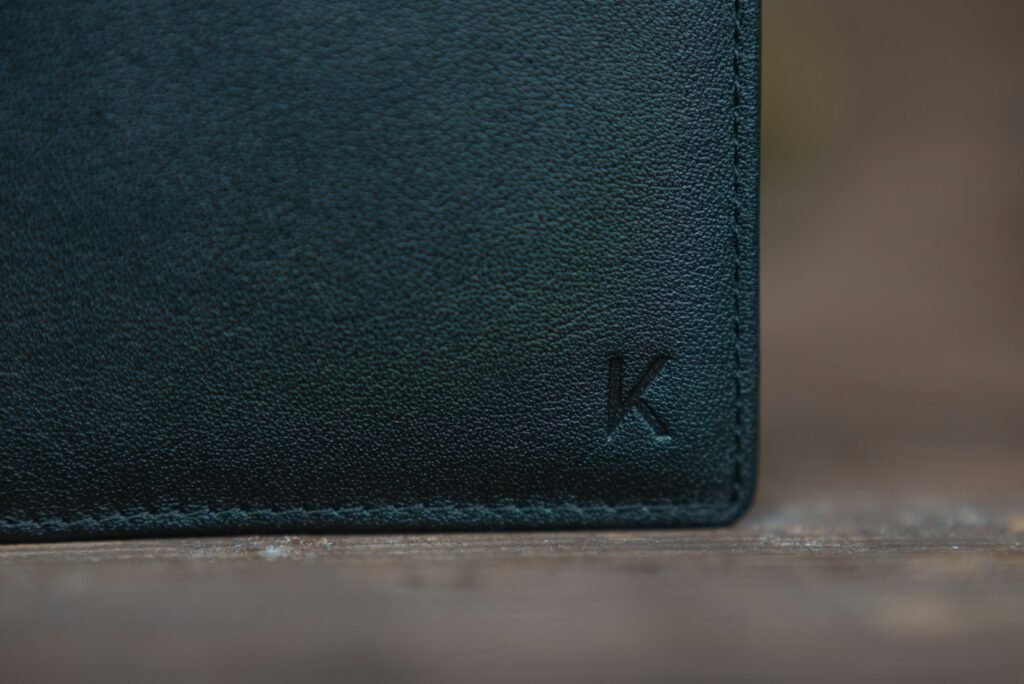
- Initials, not a job title. Monogramming the person’s initials keeps the gift personal; engraving a title or department name ties it right back to the job they’re leaving.
- A date, not a tagline. The retirement date itself, or the start and end years of their tenure, carries more weight than a generic “congratulations on your retirement” line.
- A number that means something. Years of service is a common and well-received choice, especially on a wallet or Dopp kit where it stays private rather than being displayed on a desk.
A wallet is a particularly good canvas for this kind of understated personalization — it’s carried daily but the engraving itself is only seen by the retiree, which tends to feel more like a keepsake and less like a company plaque.
Group Gift Etiquette for a Retiring Colleague
Retirement is one of the more common group-gift occasions in an office, and it comes with its own small etiquette questions worth settling early.
- Set a suggested contribution, not a mandatory one. $10 to $30 per person is typical, and framing it as suggested avoids putting junior staff on the spot.
- Collect before deciding on the gift, so the total budget is known before anyone commits to a specific item.
- One larger gift beats several small ones almost every time — a pooled $150 toward a travel bag outperforms fifteen $10 gift cards.
- Loop in a spouse or partner if there is one, both for sizing questions and to make sure the gift fits how the couple’s retirement plans actually look.

Once the group settles on a piece, our general leather gift guide is a useful next stop for comparing options side by side across budgets, and for occasions beyond retirement where the same “practical over sentimental-only” thinking applies.
Frequently Asked Questions
How much should I contribute to a group retirement gift?
$10 to $30 per person is typical for an office or department collection, though close colleagues sometimes give more individually on top of a group contribution.
Is a briefcase ever an appropriate retirement gift?
Rarely. A briefcase is built around office work, which is exactly what the retiree is leaving behind. A travel bag, Dopp kit, or wallet fits the “next chapter” far better.
Should a retirement gift be personalized with a company logo?
No — a company logo ties the gift back to the job. Initials, a retirement date, or years of service read as personal instead of corporate.
What’s a good retirement gift when you don’t know the person’s hobbies?
A travel bag or wallet is a safe default, since both are broadly useful regardless of how someone plans to spend their retirement.
How much do companies typically budget for a retirement gift?
It varies widely by tenure and seniority, ranging from roughly $50 for shorter tenures up to $1,000 or more for senior staff retiring after decades of service.
Should I ask the retiree what they want instead of guessing?
For a close relationship, asking directly is entirely appropriate and often produces the best outcome. For a group or office gift, a broadly useful, personalizable piece is the safer route when asking isn’t practical.
For more on typical retirement gift budgets and ideas, see the National Council on Aging’s retirement gift guide.