Returning to the Office: What You Actually Need After Working Remote
A growing share of companies are tightening in-office requirements this year, and plenty of people who spent the last several years working from a kitchen table are now facing a real commute again, often with more days in the office than they expected. The bag that quietly lived in a closet through the remote years usually isn’t ready for that — worn straps, an outdated laptop-sleeve fit, or simply a style that reads more casual than the office culture it’s heading back into now expects.
This guide covers what actually needs replacing for a real return to office, not a wish list of nice-to-haves, and how to prioritize spending if you’re rebuilding a commute kit from scratch after years away from one.

Why This Transition Is Different from a Normal New Job
Starting a new job usually means figuring out one new commute and one new dress code. Returning to office after years remote often means both of those things have quietly shifted underneath you — a former daily train route that’s been unused long enough to feel unfamiliar, and an office culture that may have loosened, tightened, or simply changed in ways you weren’t there to notice happen gradually.
That’s worth naming directly, because it changes what “readiness” actually means here. It’s not just about owning the right bag; it’s about walking back into a routine you haven’t run in years, which is its own adjustment separate from the gear question.
What Actually Needs Replacing
| Item | Why Remote Work Changed the Need | Priority |
|---|---|---|
| Commute bag | A casual tote or backpack that worked at home may not fit the office’s actual dress code | High |
| Laptop protection | Company laptops have changed size and thickness since the last real commute | High |
| Cardholder / badge case | Building access and ID systems often changed during the remote years | Medium |
| Business-casual wardrobe basics | Loungewear-adjacent home-office clothes rarely translate directly back | Medium |
The bag is worth prioritizing first, for a simple reason: it’s the one item that’s visible in every meeting, every hallway interaction, and every first impression on your first weeks back, in a way a wardrobe refresh or new badge case simply isn’t.

Choosing a Commute Bag After Years of Working from Home
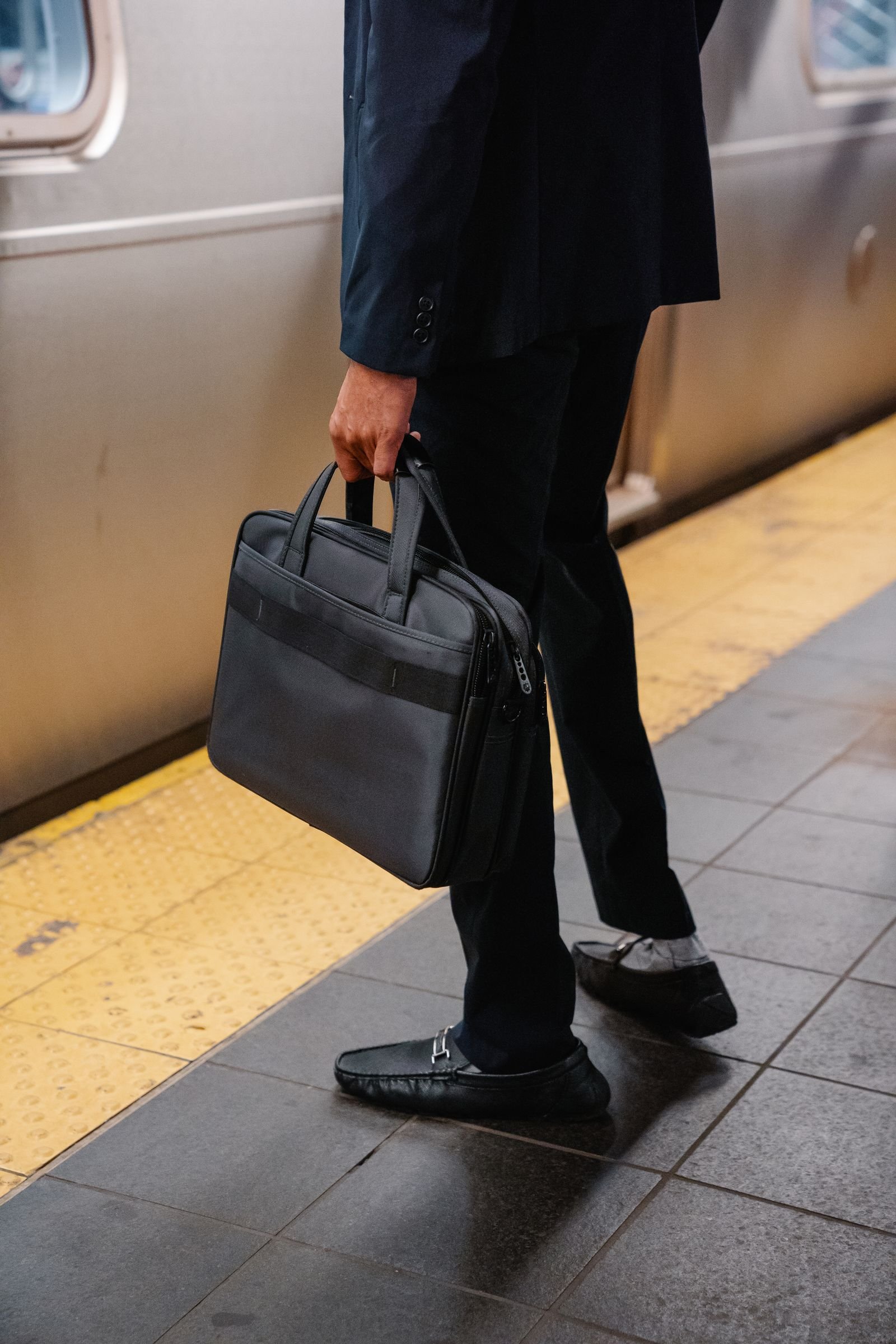
A bag that worked for a home office rarely translates directly to a real commute. Something that only needed to hold a laptop and a water bottle from the kitchen to the desk now needs to survive a train platform, a rainy walk, and a full workday away from home — a genuinely different set of demands.
A structured leather briefcase or a well-built commute-sized tote generally outperforms a casual backpack for office settings specifically, since it reads as considered rather than merely functional. Our leather briefcase buying guide covers sizing and material choices in more depth if you’re starting that search from scratch.

Re-Learning the Physical Commute
Years of working from a fixed home setup means a lot of small physical habits around commuting have simply atrophied — carrying weight over a shoulder for an hour, navigating a crowded platform one-handed, or just having a coat, bag, badge, and coffee all in play at once during a single door.
A bag with a genuinely comfortable strap and a stable, balanced shape matters more here than it might seem on paper, since it’s carrying real weight through a routine your body hasn’t practiced consistently in years. This is a small, unglamorous detail that a lot of return-to-office advice skips past entirely, in favor of talking exclusively about wardrobe and etiquette.
Give yourself a genuine adjustment window rather than expecting the first week back to feel routine. A commute that once ran on autopilot after years of daily repetition takes a few weeks to feel automatic again, and that’s true whether the gap was six months or three years. Treating the first stretch as a rebuilding period, rather than a return to a fully familiar routine, takes the pressure off getting every detail right on day one.
Building the Daily Kit
Once the bag itself is settled, what actually goes inside it deserves its own pass, since a laptop, charger, notebook, and badge tossed in loose gets old fast during an actual commute rather than a five-foot walk from the couch to a desk. Our daily carry organization guide covers a system for packing a briefcase efficiently, built around exactly this kind of daily commute use.

Reading the Office’s Actual Dress Code Again
Office norms often loosen or shift over a multi-year absence in ways that aren’t obvious from the outside, and remote-era assumptions about what’s “business casual” can be noticeably out of step with what a specific office actually expects now. Rather than guessing, a quick, direct question to a colleague who’s already back in-office regularly gets a more accurate answer than any general trend piece can.

A leather bag has a practical advantage here worth calling out directly: it reads as appropriate across a wider range of office dress codes than almost anything else in a commute kit. A well-made briefcase or structured tote doesn’t look out of place whether the day’s dress code turns out to be genuinely formal or fully casual, which makes it one of the safer first purchases to make before you’ve fully re-learned the office’s current norms.
Budgeting the Return-to-Office Refresh
| Priority Tier | What’s Included | Typical Spend |
|---|---|---|
| Essential | One quality commute bag with laptop protection | $300–$600 |
| Recommended | Add a cardholder or badge case, a few wardrobe basics | $400–$900 total |
| Full refresh | Bag, wardrobe basics, accessories, umbrella and weather gear | $800–$1,500 total |

Spreading the refresh across a few paychecks rather than buying everything before day one is a reasonable approach for most people. The bag is the one item worth front-loading, since it’s doing the most visible, daily work of the entire kit from the very first morning back.
Frequently Asked Questions
What’s the single most important purchase for returning to office after remote work?
A quality commute bag with real laptop protection. It’s the one item visible in every meeting and hallway interaction, and it needs to survive an actual commute rather than a walk across a home office.
Should I buy a backpack or a briefcase for returning to the office?
A structured briefcase or commute-sized tote generally reads as more considered for office settings than a casual backpack, though the right choice depends on your specific office’s dress code.
How much should I budget for a return-to-office refresh?
A solid commute bag alone runs $300 to $600. A fuller refresh including accessories and wardrobe basics typically lands between $800 and $1,500, though spreading purchases out is a reasonable approach.
How do I know what my office’s current dress code actually is?
Ask a colleague who’s already back in-office regularly rather than guessing from memory or a general trend piece — office norms often shift in either direction during a long remote stretch.
Why does a leather bag work well for an uncertain dress code?
It reads as appropriate across a wide range of office cultures, from formal to casual, which makes it a safer first purchase before you’ve fully re-learned a specific office’s current norms.
What if my commute route itself has changed since I last used it regularly?
Treat the physical routine as its own adjustment separate from gear — carrying weight, navigating a platform, and juggling a bag and coffee one-handed are habits that fade with years away and take a little time to rebuild.
For more on how return-to-office mandates are unfolding in 2026, see Archie’s return-to-office statistics report.